
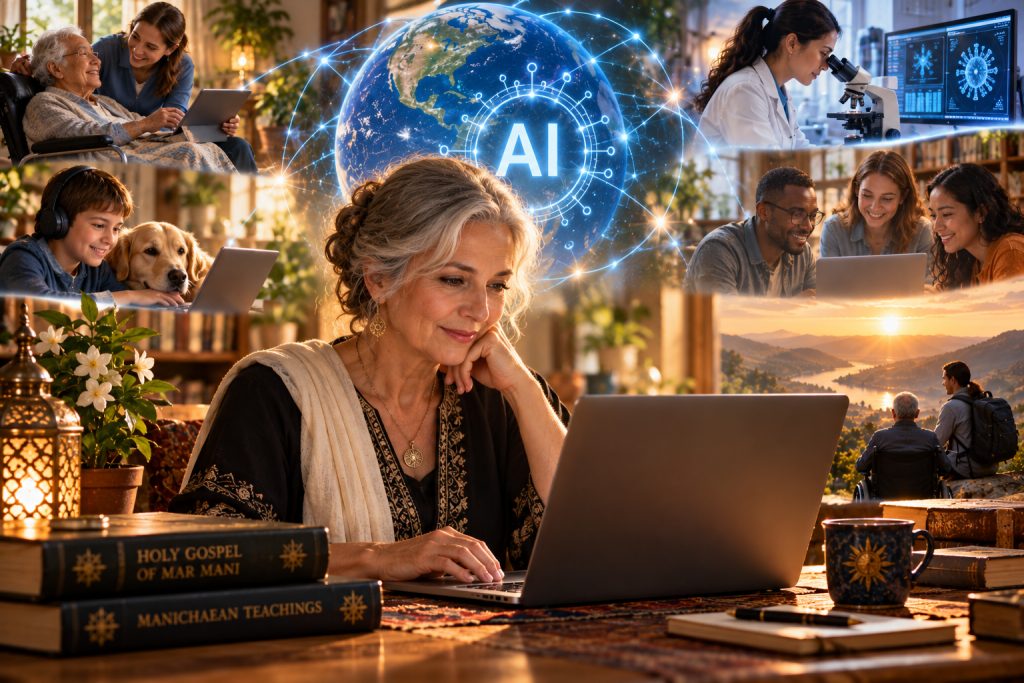
 We are living in a time when technology is changing the way people live, communicate, and understand the world around them. One of the most significant developments in recent years has been artificial intelligence, commonly called AI. Some people welcome it with enthusiasm, while others approach it with suspicion or even fear. As Manichaeans, we should consider these developments with wisdom, recognizing that something created by human intelligence can be used for good or for harm. What matters is how we choose to use it and whether our actions remain consistent with the virtues and teachings of our Faith.
Artificial intelligence is not something we need to fear simply because it is new or unfamiliar. Throughout history, humanity has developed tools that have changed everyday life. The printing press made knowledge more widely available, medical advancements have helped relieve suffering, and modern communication has allowed families and communities to remain connected across great distances. These developments have brought many blessings when used responsibly. AI can also serve worthwhile purposes, particularly when it helps people overcome difficulties, gain useful knowledge, or improve their quality of life.
Consider those who live with disabilities, chronic illnesses, or physical limitations. Technology can sometimes make everyday activities easier and provide greater independence to people who might otherwise struggle. For an elderly person who has difficulty seeing, someone who cannot easily use their hands, or an individual whose mobility is severely limited, properly designed technology can offer meaningful assistance. When artificial intelligence is used to help someone live with greater dignity, participate more fully in daily life, or maintain contact with loved ones, we can recognize the good that comes from such efforts.
Our Faith places considerable importance upon compassion, kindness, truthfulness, and the responsible exercise of our abilities. These virtues should guide us in our use of modern technology just as they guide us in our relationships with other people. We should never use artificial intelligence to deceive, exploit, humiliate, or deliberately mislead others. Nor should we use it to spread hatred, manufacture false accusations, or take advantage of those who are vulnerable. Something that could have been used to help another person becomes harmful when placed in the service of selfishness or dishonesty.
Truthfulness is especially important. Artificial intelligence can sometimes provide incorrect information, even when its responses appear convincing. We must be willing to question what we receive, verify important claims, and exercise our own judgment. Just because something appears on a computer screen does not make it true. As followers of the Blessed Prophet Mar Mani, we are called to seek truth and reject falsehood. This responsibility does not disappear when we use modern technology. In fact, it becomes even more important when information can be produced and distributed so quickly.
We should also be mindful of how artificial intelligence affects our relationships with others. No technological system should become a substitute for genuine human compassion, friendship, or spiritual fellowship. A machine may provide useful assistance, but it cannot replace the warmth of a loving family, the kindness of a faithful friend, or the comfort of someone who sits beside us during a difficult time. Our spiritual lives must remain centered upon God, prayer, the practice of virtue, and our responsibilities toward one another.
There is also a matter of personal responsibility. We should not allow technology to make every decision for us or surrender our moral judgment simply because a system appears knowledgeable. God has given human beings the capacity to reason, to examine their actions, and to make choices. We remain accountable for what we do, regardless of whether technology assisted us. If we use artificial intelligence to accomplish something dishonest or harmful, we cannot excuse ourselves by claiming that the machine was responsible. The decision to act remains our own.
At the same time, we should avoid condemning those who choose to use AI responsibly. Some people may be uncomfortable with it, and their concerns deserve respect. Others may find it especially helpful because of their circumstances. We should not judge someone’s sincerity, intelligence, or spiritual commitment simply because they make use of modern technology. Our Faith calls us to examine the fruits of our actions. Are we helping others? Are we being truthful? Are we showing compassion? Are we acting with humility and self-control? These questions are far more important than whether a particular tool is old or new.
We must also remember that technology itself is not our salvation. Artificial intelligence cannot free the soul from Darkness, grant divine wisdom, or replace the spiritual teachings entrusted to us through the Blessed Prophet Mar Mani. It is a human-made instrument, limited by the knowledge, decisions, and purposes of those who develop and use it. Our hope remains in the One God and the eternal Kingdom of Light. Technology may assist us during our earthly journey, but it cannot take the place of faith, repentance, prayer, or the cultivation of virtue.
Perhaps one of the most valuable lessons we can learn from the development of artificial intelligence is that greater ability brings greater responsibility. When humanity develops new ways of influencing the world, we must also strengthen our commitment to doing what is right. Knowledge without compassion can become dangerous. Intelligence without humility can lead to arrogance. Power without moral restraint can cause suffering. But when knowledge is guided by kindness, honesty, patience, and concern for others, it can become an instrument for genuine good.
We do not need to reject every advancement simply because the world around us is changing. Neither should we embrace every new development without careful consideration. We can approach artificial intelligence with gratitude for the benefits it may offer, caution regarding its limitations, and a firm commitment to the principles of our Faith.
If it helps relieve suffering, let us be thankful. If it assists someone who is struggling, let us recognize the kindness that can be expressed through its responsible use. If it makes useful knowledge more accessible, let us employ that knowledge wisely. And whenever we encounter something that threatens truth, dignity, compassion, or human well-being, let us have the courage to reject its misuse.
The Blessed Prophet Mar Mani taught us to distinguish between Light and Darkness. In our daily lives, that distinction is reflected in the choices we make, the intentions we cultivate, and the way we treat others. Artificial intelligence presents another opportunity to exercise that spiritual discernment.
Let us use the tools available to us with wisdom, humility, and compassion, always remembering that our highest calling is not simply to become more knowledgeable, but to become more faithful, truthful, and loving servants of the Light.